
Exploring the MBA in Food and Agri Business Management
19th Aug 2026 | 7 min
Content
Key Takeaways
- SIBM Nagpur offers the two-year, full-time residential M.B.A. in Food and Agri Business Management.
- The programme combines management fundamentals with agri-value chains, food processing, sustainable agriculture and rural enterprise management.
- Eligible candidates need at least 50% in graduation, or 45% for Scheduled Caste and Scheduled Tribe candidates.
- SNAP 2026 registration closes on 25 November 2026, and the tests are scheduled for 13, 19 and 26 December 2026.
- Candidates must register and pay separately for SNAP tests and every MBA programme they select.
What Is the MBA in Food and Agri Business Management
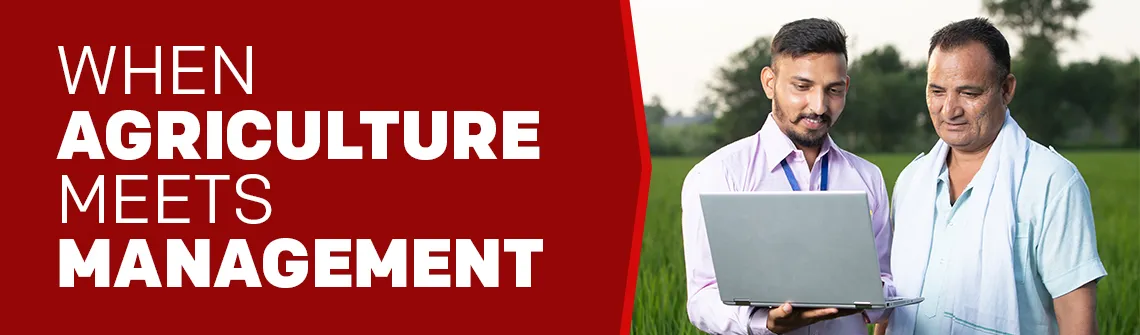
The M.B.A. in Food and Agri Business Management at SIBM Nagpur is a two-year, full-time residential programme for candidates who want to work across agriculture, food and related business sectors. It combines core management learning with sector-specific study and practical exposure.
As you prepare for SNAP, SIBM Nagpur is worth considering if your interests connect business with agriculture. The programme focuses on how food and agricultural products move through markets, how rural enterprises operate and how management decisions affect value chains, processing and sustainability.
The learning experience extends beyond classroom theory through field immersion, industry projects and stakeholder engagement. These activities help students understand rural economies, technology use and market-led business decisions in practical settings.
Review the exact programme before choosing your SNAP route.
Explore eligibility and focus areas on the SIBM Nagpur programme page .
Why Choose SIBM Nagpur for Food and Agri Business Management
SIBM Nagpur is a constituent of Symbiosis International (Deemed University) and offers an academic environment built around management education, experiential learning and industry exposure. Its location near the MIHAN industrial and Special Economic Zone places students close to sectors that include food processing, manufacturing, information technology and pharmaceuticals.
The institute's learning approach includes case-based teaching, live projects, internships, corporate interactions and guidance from faculty and mentors. For Food and Agri Business Management students, this structure supports the practical application of management concepts to agricultural and food-sector questions.
What Is the Symbiosis Brand and Academic Legacy
Symbiosis International (Deemed University) has a history of more than five decades. Its academic network brings together students, faculty and institutes from different disciplines and locations. SIBM Nagpur contributes to this wider university environment while maintaining a management-focused identity.
For students in a specialised MBA, access to a broader university network can support peer learning, interdisciplinary perspectives and exposure to different management domains. The value of that network depends on how actively a student uses academic, industry and alumni opportunities during the programme.
Which Symbiosis Institute Offers This MBA
| Institute | SNAP 2026 Programme | How It Differs |
|---|---|---|
| SIBM Nagpur | M.B.A. in Food and Agri Business Management | Combines food, agriculture and management |
| SIIB Pune | M.B.A. in Agri Business | Focuses on agribusiness management |
| SIOM Nashik | M.B.A. in Agri Operations Management | Focuses on agricultural operations |
| SSCANS Pune | M.B.A. in Food Technology and Food Enterprise Management | Combines food technology and enterprise |
Compare all institutes and programmes in the official SNAP overview.
What Is the Scope of Food and Agri Business Management
The programme is designed for candidates who want to understand how management works across food and agricultural systems. Its scope includes agri-value chains, food processing, sustainable agriculture and rural enterprise management.
The original focus on agri-marketing, supply chains, rural development and agricultural finance remains relevant to the sector. Together, these areas can prepare students to analyse sourcing, distribution, market access, enterprise growth and the financial decisions that support agricultural and food businesses.
Graduates may work with agribusiness companies, food processors, cooperatives, development organisations, rural enterprises and other organisations connected with agriculture and food. The exact opportunity depends on the role, employer, skills, experience and market conditions.
Who Is Eligible for the MBA at SIBM Nagpur
A candidate must be a graduate from a recognised university or Institution of National Importance with at least 50% marks or an equivalent grade. Scheduled Caste and Scheduled Tribe candidates need at least 45% marks or an equivalent grade.
Meeting the academic threshold does not guarantee admission. Candidates must also complete the SNAP and programme registration requirements, take SNAP 2026 and qualify for the institute's further admission process.
Review the current SNAP programme eligibility criteria before registering.
What Are the SNAP 2026 Entrance Test Details
SNAP is the mandatory entrance test for the M.B.A. in Food and Agri Business Management at SIBM Nagpur. SNAP 2026 is a 60-minute computer-based objective test with 60 questions and 60 marks.
| SNAP 2026 Section | Questions | Marks |
|---|---|---|
| General English | 10 | 10 |
| Analytical and Logical Reasoning | 20 | 20 |
| Quantitative Data Interpretation and Data Sufficiency | 20 | 20 |
| Ethics Morality and Values | 10 | 10 |
| Total | 60 | 60 |
Each correct answer carries one mark, and each incorrect answer attracts a penalty of 25% of the marks assigned to that question. Candidates may appear for up to three tests. If a candidate takes more than one test, the higher score is considered for the final percentile calculation.
Study the complete SNAP 2026 test structure before planning your preparation.
SNAP 2026 Dates and Fees
| Milestone | Official Detail |
|---|---|
| Registration and payment close | 25 November 2026 |
| SNAP Tests 1, 2 and 3 | 13, 19 and 26 December 2026 |
| Result announcement | 12 January 2027 |
| SNAP test fee | INR 2,550 per test plus applicable taxes |
| Programme fee | INR 1,000 per programme plus applicable taxes |
Check every SNAP 2026 deadline before completing payment.
Review test and result dates on the SNAP important dates page .
How Does the Admission Process Work
The admission process begins with two connected registrations. Candidates must register and pay for the SNAP test date or dates they choose. They must also select the SIBM Nagpur M.B.A. in Food and Agri Business Management and pay the separate programme registration fee before the applicable programme deadline.
Paying only the SNAP test fee does not make a candidate eligible for programme shortlisting. Both the SNAP test fee and the programme registration fee must be completed as instructed on the portal.
Selection After SNAP 2026
SIBM Nagpur shortlists candidates for Group Exercise and Personal Interaction, or GE-PI, based on the overall SNAP percentile. The institute conducts the further admission process separately for each programme, and candidates must attend every required GE-PI component to remain eligible for the merit, wait or reject list.
| Final Merit Component | Weightage |
|---|---|
| SNAP score out of 60 scaled to 50 | 50 marks |
| Group Exercise | 10 marks |
| Personal Interaction | 40 marks |
| Total | 100 marks |
The official 2026 process specifies GE-PI. It does not list a separate group discussion or written ability test for the common final merit calculation.
What Does the Programme Curriculum Cover
The programme combines management fundamentals with knowledge of the agriculture and food sectors. The current SIBM Nagpur programme page identifies agri-value chains, food processing, sustainable agriculture and rural enterprise management as its main focus areas.
The curriculum may also develop understanding of agricultural marketing, supply chains, policy, rural development and enterprise decisions through courses, projects and field-based learning. Candidates should check the latest institute curriculum because subjects and electives may change by academic cycle.
Electives and practical work can help students shape their learning around interests such as sustainability, entrepreneurship, processing, market development or value-chain management.
What Can Students Learn from Faculty and Industry Exposure
Faculty members and industry mentors help students connect management concepts with sector practice. Case discussions, projects and classroom interaction can show how organisations make decisions about sourcing, markets, operations, finance and rural stakeholders.
SIBM Nagpur's programme information highlights field immersions, industry projects and stakeholder engagement. These experiences can help students test ideas in real settings and build a practical understanding of rural economies, technology applications and market-driven strategies.
How Do Placements and Industry Collaborations Support Careers
Internships, live projects, corporate interactions and placement support give students opportunities to understand employer expectations. For a specialised programme, these experiences can also help candidates identify which part of the food and agriculture sector best fits their skills and interests.
Applicants should review the latest placement information directly from SIBM Nagpur. Compare the roles, sectors, participating organisations and reporting period rather than relying on an isolated salary figure.
Which Careers Can Graduates Explore
Graduates can explore roles across agribusiness, food processing, supply chains, rural enterprise and development organisations. Career options may include:
- Agri-marketing and market development
- Procurement and agri-value chain management
- Food processing operations and business development
- Supply chain and logistics management
- Rural enterprise and cooperative management
- Agricultural finance and sector consulting
- Sustainability and development-sector roles
The programme's broad management base can support movement across functions, but role eligibility and career outcomes depend on the employer, candidate profile, internship experience, performance and market demand.
What Should Applicants Know About Starting Packages
Starting packages vary by role, employer, sector, location, prior experience and individual performance. A single expected salary figure cannot represent every graduate or placement cycle.
When evaluating return on investment, applicants should review the latest official placement report and compare programme fees, role quality, sector mix, median or average compensation where published, internships and long-term career fit. This provides a more balanced view than focusing only on the highest package.
Plan both SNAP and programme registration before applying.
Follow the complete admission path in the official SNAP overview .
Why Consider SIBM Nagpur for This MBA
The M.B.A. in Food and Agri Business Management at SIBM Nagpur offers a focused route into the business side of agriculture and food. It combines management fundamentals with sector learning, field exposure and project work.
If your goals include agri-value chains, food processing, sustainable agriculture or rural enterprise, compare the programme curriculum, eligibility, fees and placement information with your career plan. Then complete SNAP and programme registration within the official deadlines.
Use the official SNAP registration process to complete each required step.
Frequently Asked Questions
SIBM Nagpur offers the M.B.A. in Food and Agri Business Management. The 2026 SNAP bulletin lists it as a SNAP-mandatory programme.
It is a two-year, full-time residential MBA programme.
Candidates need a bachelor's degree from a recognised university or Institution of National Importance with at least 50% marks or an equivalent grade. The threshold is 45% for Scheduled Caste and Scheduled Tribe candidates.
Yes. Candidates must take SNAP 2026, apply separately to the SIBM Nagpur programme and pay both the applicable test and programme registration fees. Shortlisted candidates must then attend the programme's Group Exercise and Personal Interaction process.