
Building Future Tech Leaders with an MBA at SICSR Pune
21st Aug 2026 | 5 min
Content
Introduction
The SNAP 2026 registration window is open and closes on 25 November 2026. Through SNAP, candidates can apply to the two SICSR Pune programmes listed for the 2027-29 admission cycle: M.B.A. (Information Technology) and M.B.A. (Technology Management).
Digital transformation and information technology now shape almost every industry. Organisations need professionals who can understand technology, analyse business needs and lead teams through change. For students interested in that intersection, SICSR Pune offers management education with a strong technology focus.
This updated guide retains the original overview of SICSR Pune while correcting programme names, adding the SNAP 2026 schedule, clarifying eligibility and selection, and incorporating current curriculum, intake and placement information.
Choose the right SNAP route before paying.
Compare programmes, fees and test options in the SNAP overview .
Key Takeaways for SICSR Pune MBA Aspirants
- SICSR Pune offers M.B.A. (Information Technology) and M.B.A. (Technology Management) through SNAP 2026.
- The current intake is 60 students for M.B.A. (Information Technology) and 30 students for M.B.A. (Technology Management).
- Applicants need at least 50% marks or an equivalent grade; the minimum is 45% for SC/ST candidates.
- Final selection uses SNAP, Group Exercise and Personal Interaction with a 50:10:40 weightage.
- SNAP registration closes on 25 November 2026, while SICSR programme registration closes on 16 January 2027.
Why Choose SICSR Pune for an MBA
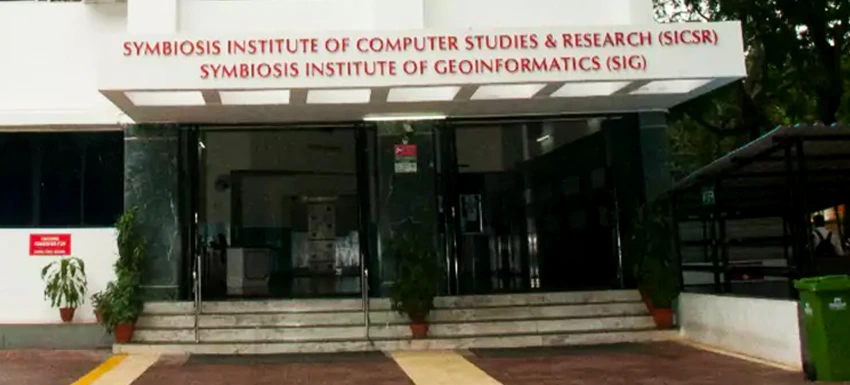
Established in 1985, Symbiosis Institute of Computer Studies and Research (SICSR) Pune is one of the early institutions in Maharashtra to focus on computer education. Its central Pune location, academic technology programmes, diverse student community and industry-oriented learning environment continue to support students interested in IT and digital business.
SICSR Pune combines management fundamentals with technology, analytics and practical application. Interactive sessions, case studies, projects and industry engagement help students connect classroom concepts with business problems.
The institute also provides computer laboratories, classrooms, audio-visual halls, a reference library and online learning resources. These facilities support technical work, presentations, research and collaborative learning.
Which MBA Programmes Does SICSR Pune Offer Through SNAP 2026
The SNAP 2026 bulletin lists two current SICSR programmes. The former M.B.A. (Digital Transformation) name used in the older blog has been replaced by M.B.A. (Technology Management) for the current admission cycle.
| Programme | Current Focus | Intake |
|---|---|---|
| M.B.A. (Information Technology) | Technology-enabled management, analytics, IT infrastructure and software processes | 60 |
| M.B.A. (Technology Management) | Technology strategy, AI-enabled business, product development and innovation | 30 |
M.B.A. in Information Technology
The M.B.A. (Information Technology) blends management acumen with technology and AI-oriented learning. The current programme highlights future-ready pathways in Banking and Financial Markets, Data Analytics, IT Infrastructure Management and Software Process Management. It is designed for students who want to deliver technology-based business solutions and move towards roles such as business analyst, data analyst, technology consultant, project professional or IT manager.
M.B.A. in Technology Management
The M.B.A. (Technology Management) is an interdisciplinary programme at the intersection of leadership, artificial intelligence and corporate strategy. It develops skills in digital business models, business intelligence, product design, cloud management, IT security, strategic management and innovation. The programme suits students who want to manage technology products, portfolios, transformation initiatives and technology-driven businesses.
Review SICSR programmes before selecting preferences.
Check current eligibility and intake on the SICSR programme page .
Who Is Eligible for SICSR Pune MBA Admission
Applicants must hold a graduate degree from a recognised university or Institution of National Importance with at least 50% marks or an equivalent grade. The minimum is 45% or an equivalent grade for candidates belonging to the Scheduled Caste or Scheduled Tribe categories.
The academic eligibility is the same for M.B.A. (Information Technology) and M.B.A. (Technology Management). Candidates should also confirm all reservation, documentation and programme-specific requirements on the official SICSR and SNAP websites before applying.
How Does SNAP 2026 Lead to SICSR Pune Admission
SNAP 2026 is the first stage of the admission process. Candidates must complete both SNAP test registration and separate programme registration before the relevant deadlines.
- Register for SNAP 2026 and choose one, two or all three available test dates.
- Pay INR 2,550 per SNAP test, plus applicable government taxes.
- Select one or both SICSR Pune programmes and pay INR 1,000 per programme, plus applicable taxes.
- Take SNAP 2026. If more than one test is taken, the higher score is considered for the final percentile calculation.
- Attend the Group Exercise and Personal Interaction rounds if shortlisted by SICSR Pune.
- Check the merit list and complete the admission fee payment by the institute deadline if selected.
Paying only the SNAP test fee does not complete the SICSR application. The separate programme registration fee must be paid for every programme the candidate wants SICSR to consider.
How Is the Final SICSR Merit Score Calculated
SICSR Pune calculates the composite merit score out of 100 marks. SNAP contributes 50 marks, the Group Exercise contributes 10 marks and the Personal Interaction contributes 40 marks.
What Are the Important SNAP 2026 and SICSR Pune Dates
The SNAP bulletin provides the common test schedule, while SICSR publishes the programme registration, shortlisting, GE-PI and merit-list schedule. SICSR notes that institute dates are tentative and may change.
| Admission Activity | Date |
|---|---|
| SNAP 2026 registration and payment closes | 25 November 2026 |
| SNAP admit cards available | 7, 11 and 18 December 2026 |
| SNAP 2026 computer-based tests | 13, 19 and 26 December 2026 |
| SNAP 2026 result | 12 January 2027 |
| SICSR registration and payment closes | 16 January 2027 |
| SICSR shortlist declaration | 21 January 2027 |
| GE-PI slot booking | 21-28 January 2027 |
| SICSR Group Exercise and Personal Interaction | 7-9 and 13-14 February 2027 |
| First merit list | 24 February 2027 |
| First merit-list fee deadline | 4 March 2027 |
| Programme commencement | 1 June 2027 |
Complete both registrations before each deadline.
Follow the official steps in the SNAP registration guide .
What Does the SICSR Pune MBA Curriculum Cover
The curricula are designed to combine business management with current technology. Programme structures are revised over time, so the following subjects are representative rather than an exhaustive semester-wise list.
Representative M.B.A. (Information Technology) Subjects
- Object-Oriented Analysis and Design
- Relational Database Management Systems
- Business Statistics and Data Analysis
- Python and application development
- Software Engineering and Agile Practices
- Enterprise Resource Planning
- AI and Machine Learning for Business Management
- Generative AI and Use Cases
Representative M.B.A. (Technology Management) Subjects
- Generative AI for Business
- Digital Business Models
- Business Intelligence
- Graphic Design and Digital Tools
- Overview of IT Security
- Product Design and Product Interface Design
- Design Thinking and Innovation
- Cloud Management and Strategic Management
The teaching approach includes interactive sessions, case discussions, examples, projects and industry-oriented learning. This combination helps students build technical understanding, problem-solving ability, management judgement and communication skills.
What Faculty Experience Can Students Expect
SICSR Pune has faculty members with academic and professional experience across technology and management. Their guidance helps students understand technical concepts, business applications and changing industry expectations.
Classroom teaching is complemented by projects, seminars, guest sessions and practical assignments. These methods support collaborative learning and help students apply concepts beyond textbooks.
What Do Internships and Placements Offer
SICSR Pune has a dedicated placement cell that works with industry and supports students through aptitude tests, technical tests, group discussions, interview preparation, presentation skills and soft-skills training. Internships allow students to apply what they learn and gain professional exposure before final placement.
The institute states that more than 50 companies participate in placements on average each year. Recruiters listed on the current SICSR website include Amazon, IBM, TCS, HSBC, Colgate, Persistent, Deloitte, Cognizant, Infosys, Cummins, ITC Infotech, Asian Paints, Tech Mahindra and other organisations.
Recruiter participation, roles, salaries and outcomes vary by year, programme, market conditions and individual performance. Applicants should use the latest official placement material when evaluating outcomes.
What Infrastructure Does SICSR Pune Provide
Campus infrastructure supports academic work, technical practice and student activities. The institute currently reports 12 classrooms, five computer laboratories, two audio-visual halls and 102 N-Computing devices for students and faculty.
- Library and reference resources
- Auditorium and audio-visual learning spaces
- Reading room and activity facilities
- Hostel support
How Do Extracurricular Activities Support Student Growth
SICSR Pune organises sports, cultural and technical activities that allow students to explore interests beyond the classroom. Participation can develop teamwork, coordination, accountability, problem-solving and quick decision-making.
The institute also hosts technical events, workshops, hackathons, Hurukuro lectures, cultural programmes and the student e-magazine. These activities create opportunities to practise communication and leadership while engaging with technology, creativity and the community.
How to Apply for SICSR Pune Through SNAP 2026
Candidates planning to join the 2027-29 batch should compare both programmes, confirm eligibility and complete SNAP registration by 25 November 2026. They must also select and pay for each SICSR programme by the institute deadline of 16 January 2027.
Use the SNAP important dates page to track the examination schedule, and review the SICSR programme page before submitting programme preferences.
SICSR Pune can be a relevant choice for students who want to combine management education with information technology, analytics, AI, product thinking and technology strategy. The right programme depends on whether the candidate prefers a broader IT-management path or a focused technology-management route.
Frequently Asked Questions
Yes. SNAP 2026 is mandatory for SICSR Pune's M.B.A. (Information Technology) and M.B.A. (Technology Management) programmes.
SICSR Pune offers M.B.A. (Information Technology) and M.B.A. (Technology Management) for the current SNAP admission cycle.
Applicants need a recognised graduate degree with at least 50% marks or an equivalent grade; the minimum is 45% for SC/ST candidates.
The computer-based tests are scheduled for 13, 19 and 26 December 2026. Candidates may take up to three tests, and the higher score is considered.
No. Candidates must also select and pay INR 1,000 plus applicable taxes for each SICSR Pune programme they choose.
Dates, fees, programme structures and admission processes are subject to change. Candidates should verify the latest details on the official SNAP and SICSR Pune websites before applying.