

SCMHRD Pune MBA Programmes Through SNAP 2026
21st Aug 2026 | 5 min
Content
Key Takeaways
- SCMHRD Pune accepts SNAP 2026 scores for three programmes: M.B.A., M.B.A. (Infrastructure Development and Management) and M.B.A. (Business Analytics).
- The core M.B.A. has general graduate eligibility, while the specialised programmes have work-experience or discipline-specific requirements.
- SNAP 2026 registration closes on 25 November 2026; the tests are scheduled for 13, 19 and 26 December 2026.
- Applicants must separately register and pay for their selected SCMHRD programme by 12 December 2026.
- The final merit framework is SNAP score scaled to 50 marks, Group Exercise worth 10 marks and Personal Interaction worth 40 marks.
Why Choose SCMHRD Pune for an MBA
If you are preparing for SNAP 2026, choosing the right institute and programme is as important as preparing for the test. Symbiosis Centre for Management and Human Resource Development (SCMHRD), Pune, offers management education that combines academic rigour, corporate exposure and practical learning.
SCMHRD is known for management education in areas such as human resources, finance, marketing, operations, business analytics and infrastructure management. Its programmes are designed to help students build functional knowledge, analytical ability, communication skills and leadership judgement for changing business environments.
The institute's approach retains the original article's emphasis on discipline, adaptability and real-world learning. Case work, projects, presentations, industry interaction and experiential assignments help students connect management concepts with decisions faced by organisations.
What Makes SCMHRD Pune a Distinct Management Institute
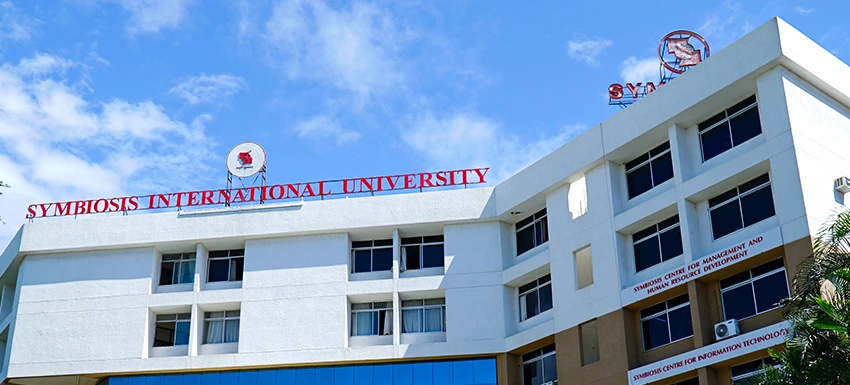
SCMHRD Pune is a constituent institute of Symbiosis International (Deemed University). The institute aims to develop managers who are functionally competent, ethically aware and responsive to economic, social and environmental contexts.
Students are encouraged to understand both rural India and global markets, evaluate the sustainability of business choices and work on live organisational questions. This supports management as both an applied science and a practice that depends on judgement, creativity and interpersonal effectiveness.
- Industry-oriented learning through live projects, cases and corporate interaction
- An emphasis on responsible leadership, ethics and sustainable decision-making
- Opportunities to strengthen communication, analysis, teamwork and presentation skills
- A residential learning environment that supports peer learning and student-led activities
Check each SCMHRD programme before applying.
Review programme names and eligibility on the SCMHRD programme page .
Which MBA Programmes Does SCMHRD Pune Offer
For the 2027–28 admission cycle through SNAP 2026, SCMHRD Pune offers three two-year, full-time residential MBA programmes. The programme names, current intakes and focus areas are:
| Programme | Intake | Primary focus |
|---|---|---|
| M.B.A. | 180 | General management with specialisations in Finance, Human Resource Management, Marketing and Operations |
| M.B.A. (Infrastructure Development and Management) | 60 | Infrastructure planning, finance, policy, projects, contracts, operations and allied sectors |
| M.B.A. (Business Analytics) | 90 | Business decisions using analytics, data science, AI/ML, modelling and visualisation |
The earlier article correctly listed these three programmes but did not distinguish their eligibility rules. Applicants should choose the exact programme name during registration because shortlisting, GE-PI and merit lists are handled separately for each programme.
Who Is Eligible for Each SCMHRD Pune MBA Programme
Eligibility is programme-specific. Meeting the minimum criteria permits an application; it does not guarantee shortlisting or admission.
| Programme | Current eligibility |
|---|---|
| M.B.A. | Graduate from a recognised university or Institution of National Importance with at least 50% marks or equivalent grade; 45% for SC/ST candidates. |
| M.B.A. (Infrastructure Development and Management) | Either BE/B.Tech/B.Arch/B.Plan with 50% marks (45% for SC/ST), or a non-engineering bachelor's degree with the same marks plus at least 12 months' full-time experience in infrastructure, infrastructure consultancy, energy, real estate, logistics, supply chain or an allied sector. |
| M.B.A. (Business Analytics) | Graduate in any discipline with 50% marks or equivalent grade (45% for SC/ST) and at least two years of full-time work experience after graduation. |
Candidates with foreign qualifications should follow the applicable equivalence requirements. Always recheck the current SNAP eligibility criteria before payment because test and programme fees are non-refundable and non-transferable.
What Are the SNAP 2026 Test Details
SNAP 2026 is the mandatory entrance test for Indian applicants to the three SCMHRD MBA programmes. It is a 60-minute computer-based test with 60 objective questions and a total of 60 marks.
| Section | Questions | Marks |
|---|---|---|
| General English | 10 | 10 |
| Analytical and Logical Reasoning | 20 | 20 |
| Quantitative, Data Interpretation and Data Sufficiency | 20 | 20 |
| Ethics, Morality and Values | 10 | 10 |
| Total | 60 | 60 |
Candidates may take up to three SNAP tests. If more than one test is attempted, the higher score is used for the final percentile calculation. The fee is INR 2,550 per test, plus applicable government taxes. A separate INR 1,000 programme registration fee, plus applicable taxes, is charged for each programme selected.
See the current SNAP exam overview for the test route, format and participating institutes.
| Plan every SNAP 2026 attempt before registration closes. Confirm test and admit-card dates on SNAP important dates. |
How Does the SCMHRD Pune Admission Process Work
Admission has two registrations: the SNAP test and the selected SCMHRD programme. Paying only the SNAP test fee does not make an applicant eligible for an SCMHRD shortlist. Follow the official registration instructions and complete both payments before the applicable deadlines.
Based on the overall SNAP percentile, each programme shortlists candidates separately for Group Exercise and Personal Interaction (GE-PI). Applicants shortlisted for more than one programme must complete the process for each programme. Attendance at every required GE-PI component is mandatory.
For final merit, the SNAP score is scaled to 50 marks, the Group Exercise carries 10 marks and the Personal Interaction carries 40 marks, for a total of 100. The SNAP 2026 bulletin does not list a Written Ability Test in this final-merit framework.
What Are the Important SNAP and SCMHRD Admission Dates
| Admission milestone | Date |
|---|---|
| SNAP 2026 registration closes | 25 November 2026 |
| Admit cards available | 7, 11 and 18 December 2026 |
| SNAP tests | 13, 19 and 26 December 2026 |
| SCMHRD programme registration closes | 12 December 2026 |
| SNAP result | 12 January 2027 |
| SCMHRD shortlist | 21 January 2027 |
| GE-PI slot booking | 21–24 January 2027 |
| MBA IDM GE-PI | 30–31 January 2027 |
| Core MBA GE-PI | 2–4 and 9–12 February 2027 |
| MBA Business Analytics GE-PI | 5–7 February 2027 |
| First merit list | 2 March 2027 |
| Fee payment deadline | 16 March 2027 |
| Programme commencement | 3 June 2027 |
Dates may be revised by the university or institute. Applicants should check the official portals regularly, especially because the SCMHRD programme-registration deadline falls before the first SNAP test.
What Does the SCMHRD Pune Curriculum Cover
SCMHRD curricula are structured around management foundations, programme-specific depth and applied learning. The exact subjects and credits can change by batch, but the core M.B.A. develops knowledge across finance, marketing, human resources, operations, strategy, economics, analytics, organisational behaviour and business communication.
The core M.B.A. allows students to specialise in Finance, Human Resource Management, Marketing or Operations. Subjects and learning areas may include financial management, management of operations, human resource management, organisational behaviour, econometrics, research, strategy and communication. Students also build skills through projects, presentations and cross-functional work.
The M.B.A. (Business Analytics) focuses on using data for business decisions. Current learning areas include data science, artificial intelligence and machine learning, predictive modelling, programming and database tools, visualisation and cloud-enabled analytics.
The M.B.A. (Infrastructure Development and Management) combines management with infrastructure-sector knowledge. It covers areas such as demand analysis, policy and regulation, environmental issues, project and site management, contracts, finance, supply chains and business law.
How Do Faculty and Teaching Methods Support Learning
Faculty members bring academic knowledge, research experience and industry perspectives into the classroom. Their role extends beyond lectures to mentoring, feedback on projects and preparation for professional decision-making.
Teaching methods include case discussions, simulations, group assignments, workshops, guest sessions, capstone work and live projects. This helps students test ideas, explain recommendations and learn how functional choices affect an organisation as a whole.
What Do Current SCMHRD Placement Results Show
Internships and placements connect classroom learning with the professional environment. The placement team supports employer engagement and recruitment processes, while students remain responsible for building the competence, performance and professional conduct needed for opportunities.
According to SCMHRD's final placement report for the MBA batch of 2023–25, the average CTC was INR 21.47 lakh per annum, the median CTC was INR 20.00 lakh per annum and the highest CTC was INR 35.90 lakh per annum. The report also states that 118+ recruiters participated, including 50+ new recruiters, and the institute recorded 91 pre-placement offers.
These figures describe the specified MBA batch and are not a salary promise for an individual student or a later batch. Outcomes vary by programme, role, prior experience, market conditions and individual performance. Applicants should consult the latest official placement report before making an ROI decision.
Choose the right SNAP programme before paying.
Compare institutes and programme names in the SNAP overview .
What Infrastructure Does SCMHRD Pune Provide
Campus life influences both learning and student well-being. SCMHRD's residential campus in Hinjawadi, Pune, supports academic, co-curricular and recreational activities.
- Library with books, journals and learning resources
- Computer laboratories and Wi-Fi-enabled academic spaces
- Auditorium and areas for workshops, events and student activities
- Hostels, cafeteria, convenience facilities and health support
- Gymnasium, yoga facilities, sports areas and an indoor swimming pool
Facilities and access arrangements can change. Students should use the institute's current campus information when planning accommodation or evaluating a specific amenity.
How Do Extracurricular Activities Support Student Growth
SCMHRD encourages students to participate beyond the classroom through clubs, committees, competitions, cultural activities, sports and institute events. These experiences give students opportunities to practise teamwork, ownership, time management and communication.
The residential environment also supports peer learning across programmes. By organising events, working in committees and representing the institute, students can build networks and apply management skills in situations with real deadlines and shared responsibility.
What Career Opportunities Follow an SCMHRD MBA
Career options depend on the programme and a student's experience, interests and performance. Core M.B.A. graduates may explore roles in human resources, marketing, finance, operations, consulting, sales, product or programme management. Business Analytics graduates may pursue analytics, data-led strategy, business intelligence, product analytics and consulting roles. Infrastructure graduates may work in projects, infrastructure finance, real estate, logistics, energy, consulting, contracts or operations.
An MBA can strengthen professional marketability, networks and leadership skills, but outcomes are individual. A good programme choice should align eligibility, curriculum, career goals, cost and the applicant's willingness to engage deeply with the learning process.
Why Begin Your SCMHRD Pune MBA Journey Through SNAP
SCMHRD Pune offers three distinct MBA pathways for applicants seeking general management, infrastructure management or business analytics. Its curriculum, faculty guidance, industry exposure, residential campus and student activities create a broad environment for professional development.
Before registering, confirm the exact programme, eligibility and deadline. Then complete both the SNAP and programme applications using the official SNAP registration guide. A careful programme choice is the first step towards a focused management journey at SCMHRD Pune.
Frequently Asked Questions
SCMHRD offers the M.B.A., M.B.A. (Infrastructure Development and Management) and M.B.A. (Business Analytics) for the 2027–28 admission cycle.
Yes. Indian applicants must take SNAP 2026 and separately register for each SCMHRD programme they want to be considered for.
Eligible engineering, architecture and planning graduates can apply directly; non-engineering graduates need the required marks plus at least 12 months of relevant full-time work experience.
SNAP registration closes on 25 November 2026, while SCMHRD programme registration closes on 12 December 2026. The tests are on 13, 19 and 26 December 2026.