

SSCANS Pune MBA in Food Technology Through SNAP 2026
21st Aug 2026 | 5 min
Content
Key Takeaways
- SSCANS Pune offers one two-year, full-time M.B.A. in Food Technology and Food Enterprise Management with an intake of 40 students.
- Eligibility is limited to graduates from listed food, hospitality, nutrition, agriculture, biotechnology and allied disciplines.
- SNAP 2026 registration closes on 25 November 2026, and the tests are scheduled for 13, 19 and 26 December 2026.
- Applicants must pay both the SNAP test fee and the separate programme registration fee.
- The curriculum combines food science, processing, safety, packaging and consumer insights with business management, analytics and entrepreneurship.
What Is the SSCANS Pune MBA in Food Technology
Food is a necessity, a creative field and a large business ecosystem. The sector connects processing, product development, quality, packaging, supply chains, consumer behaviour, hospitality and entrepreneurship. This creates a need for managers who understand both food systems and business decisions.
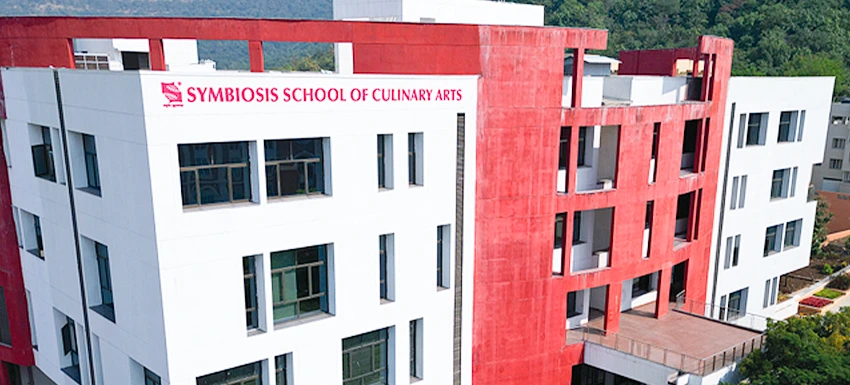
Founded in 2016, the Symbiosis School of Culinary Arts and Nutritional Sciences (SSCANS), Pune, is a constituent of Symbiosis International (Deemed University). The school was established to support the food industry's need for specialised culinary professionals, food technologists and nutrition-focused professionals.
SSCANS offers a focused pathway for graduates who want to work at the intersection of food technology and enterprise management. The official programme is the M.B.A. in Food Technology and Food Enterprise Management.
Why Choose SSCANS Pune for Food Business Management
India's food processing and food service sectors continue to expand as consumer preferences, urban lifestyles, retail channels and technology change. Food enterprises need professionals who understand quality, safety, regulation, operations, marketing and commercial decision-making.
SSCANS Pune aims to nurture professionals for food processing, FMCG, HORECA, food service and entrepreneurial settings. Its academic approach combines specialised food knowledge with management education and practical exposure.
The institute's stated goals include strengthening culinary and food education, building professional service standards, developing leadership abilities and preparing students for responsible roles across allied food-sector professions.
Check SSCANS eligibility before paying.
Review the listed qualifying disciplines on the SNAP eligibility page .
Which MBA Programme Does SSCANS Pune Offer
SSCANS Pune offers the M.B.A. in Food Technology and Food Enterprise Management. It is a two-year, full-time programme designed for graduates who want to build careers in the food industry.
The programme blends food processing, food technology, nutrition, culinary science and core business management. The current institute information lists an intake of 40 students and includes an onsite industrial internship as part of the learning journey.
The programme name should be used in full while registering. Applicants should not select a similarly named food, agriculture or hospitality programme offered by another institute.
Who Is Eligible for the SSCANS Pune MBA
The earlier article described eligibility too broadly. The current criteria require a graduate degree from a recognised university or Institution of National Importance in one of the listed relevant disciplines, with at least 50% marks or an equivalent grade. The minimum is 45% for Scheduled Caste and Scheduled Tribe candidates.
Eligible or allied disciplines listed for the programme include:
- Food Technology
- Hotel Management
- Home Science
- Food Science and Quality Control
- Culinary Arts
- Food Ecology or Sustainability
- Packaging Technology
- Nutrition
- Microbiology
- Agriculture
- Biotechnology
- Food Engineering and other relevant disciplines specified by the institute
Candidates should confirm their exact degree against the current SSCANS programme eligibility before paying because SNAP and programme registration fees are non-refundable and non-transferable.
What Are the SNAP 2026 Test Details
SNAP 2026 is the mandatory entrance test for the SSCANS MBA. It is a 60-minute computer-based test with 60 objective questions. The sections cover General English; Analytical and Logical Reasoning; Quantitative, Data Interpretation and Data Sufficiency; and Ethics, Morality and Values. Each incorrect answer attracts 25% negative marks.
Registration and payment close on 25 November 2026. SNAP 2026 is scheduled for 13 December, 19 December and 26 December 2026. Candidates may take up to three tests, and the higher score is considered when more than one test is taken. The result is scheduled for 12 January 2027.
The SNAP registration fee is INR 2,550 per test, plus applicable government taxes. A separate programme registration fee of INR 1,000, plus taxes, applies to each programme. Paying only the test fee does not complete the SSCANS application.
Plan every SNAP attempt before the deadline.
Confirm test and admit-card dates on SNAP important dates .
How Does the SSCANS Pune Admission Process Work
Step One: Register for SNAP and SSCANS
Complete the SNAP registration process, select the SSCANS M.B.A. in Food Technology and Food Enterprise Management, and pay both required fees. The current SSCANS registration and payment deadline is 15 January 2027.
Step Two: Attend the SSCANS Selection Process
Candidates are shortlisted for the Group Exercise and Personal Interaction based on their overall SNAP percentile. The current institute schedule lists shortlisting on 22 January 2027, slot booking on 25 January 2027 and the GE-PI process on 29 and 30 January 2027.
The final merit framework assigns 50 marks to the scaled SNAP score, 10 marks to the Group Exercise and 40 marks to the Personal Interaction. Candidates must attend all required components to remain eligible for the merit process.
| Admission milestone | Date |
|---|---|
| SNAP registration and payment closes | 25 November 2026 |
| SNAP tests | 13, 19 and 26 December 2026 |
| SNAP result | 12 January 2027 |
| SSCANS registration and payment closes | 15 January 2027 |
| SSCANS shortlist declaration | 22 January 2027 |
| GE-PI slot booking | 25 January 2027 |
| SSCANS GE-PI | 29 and 30 January 2027 |
| First merit list | 6 February 2027 |
| First merit-list fee deadline | 15 February 2027 |
| Programme commencement | 14 June 2027 |
Choose the correct MBA programme before paying.
Compare institute and programme names in the SNAP overview .
What Does the SSCANS MBA Curriculum Cover
The curriculum combines specialised food-sector knowledge with business management. It aims to develop an understanding of processing, preservation, culinary applications, consumer practices, food marketing, safety, hygiene, purchasing, logistics and entrepreneurship.
Food Technology and Enterprise Subjects
- Food science, quality and sensory science
- Food processing, preservation and fermentation
- Food product development and consumer studies
- Food packaging and cold-chain management
- Food safety, quality assurance and regulatory affairs
- Food laws and intellectual property rights
- Nutraceuticals and functional foods
- Supply chain, logistics and operations in the food industry
- Food business management and entrepreneurship
- Consumer analysis, market insights and product strategy
Business Management Subjects
- Management Accounting
- Digital Marketing
- Business Analytics and data-informed decision-making
- Strategic Management
- Human Resource Management
- Organisational Behaviour
- Start-ups and intellectual property
- Service Operations Management
Course titles and credits change with programme revisions. Applicants should use the latest institute programme structure for final subject, credit and assessment information.
How Does Practical Learning Support Food Business Skills
The programme uses lectures, tutorials, laboratory work, pilot-plant practicals, factory visits, presentations, case studies and group assignments. Students spend time in facilities such as the Culinary Innovation Centre and Food Business Incubation Centre.
Industry internships, live projects, expert sessions, workshops and field visits help students connect classroom concepts with food-sector decisions. Research and product-development work also supports skills in manufacturing processes, quality assurance and commercial problem-solving.
The earlier article referred to international cooperation and exchange. Such opportunities depend on current institutional agreements, academic requirements and availability, so applicants should verify them directly with SSCANS.
How Do Internships and Placements Support Students
The SSCANS training and placement cell supports students seeking training and career opportunities. The programme includes industry exposure through internships and projects, which helps students apply food technology and management knowledge in professional settings.
Placement is influenced by academic performance, practical competence, communication, role requirements and recruitment conditions. The institute provides support, but an individual placement or salary is not guaranteed.
Applicants should review the latest MBA-specific placement information before making an admission decision. Partner and recruiter participation changes across programmes and academic years.
What Infrastructure Does SSCANS Pune Provide
SSCANS has purpose-built facilities for culinary, food technology and management learning. The earlier blog incorrectly stated that each culinary laboratory measured 12,000 sq ft. Current institute information says the culinary labs and support areas are collectively spread across about 12,000 sq ft.
- Specialised culinary and bakery laboratories
- Food Quality Control Laboratory
- Culinary Innovation Centre
- Food Business Incubation Centre
- Food photography, research and studio kitchen spaces
- Hospitality training and learning resource facilities
- Library, classrooms, auditorium and multipurpose spaces
- Healthcare, cafeteria, mess and residential support facilities
Facilities, access rules and residential charges change over time. Applicants should verify the current position with the institute.
How Do Extracurricular Activities Support Student Growth
Sports, cultural activities, student events and competitions complement classroom learning. Outdoor sports facilities and a gymnasium support recreation and wellbeing, while student-led activities provide opportunities to practise teamwork, planning and communication.
What Career Opportunities Follow the SSCANS MBA
Career options depend on a student's prior discipline, internship experience, skills and the needs of recruiting organisations. Graduates may explore roles across food processing, FMCG, HORECA, food service, retail and entrepreneurial ventures.
- Food processing, plant operations, product development and innovation
- Quality assurance, food safety, regulatory affairs and compliance
- Food packaging, cold-chain, procurement, logistics and supply-chain management
- Consumer insights, marketing, brand roles, business analytics and commercial planning
- Food enterprise and start-up development
Why Choose the SSCANS Pune MBA Through SNAP
The SSCANS MBA connects food technology, nutrition and culinary science with management education. Its specialised curriculum, laboratories, industry projects and internships make it relevant for eligible graduates who want to move towards managerial and entrepreneurial roles in the food sector.
A correct application starts with programme eligibility and accurate registration. Review the official SNAP overview, select the SSCANS programme and complete both payments before the applicable deadlines.
Frequently Asked Questions
SSCANS Pune offers a two-year, full-time M.B.A. in Food Technology and Food Enterprise Management.
Applicants need a relevant degree in a listed food, hospitality, nutrition, agriculture, biotechnology or allied discipline, with 50% marks or 45% for SC and ST candidates.
Yes. Applicants must take SNAP 2026 and separately register and pay for the SSCANS programme.
The curriculum covers food processing, safety, quality, packaging, consumer insights and supply chains alongside management, analytics, marketing and entrepreneurship.
SNAP 2026 is scheduled for 13, 19 and 26 December 2026. Registration and payment close on 25 November 2026.